The United Nations declared 2010 to be the International Year of Biodiversity. It is a celebration of life on earth and of the value of biodiversity for our lives. The world is invited to take action in 2010 to safeguard the variety of life on earth: biodiversity UN Press Conference, UN Secretary General, UN Secretary General Video Message
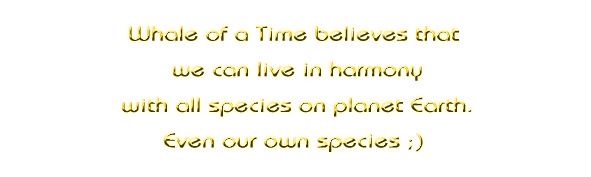
Whale of a Time stands for a new awareness of the Earth
All life depends on a healthy balanced ecosystem for present and future generations. Whale of a Time is generating awareness of terrestrial and marine ecosystems.
We support native wildlife and global sustainable projects in the ocean and in the rainforest by raising awareness of the role of biodiversity for a healthy ecosystem, which provides a steady flow of goods and services, including human life-support functions for present and future generations and is intrinsically interlinked with human welfare and poverty.
We promote positive cultural change to raise the awareness of threats to species and ecosystems in the government, cooperate, private and communal sector. We support the development of a green community and we are providing a service which generates awareness and opportunities to affirm these values
We work on a local level at schools, youth clubs, shows and exhibitions with the aim to engage our local communities with today's environmental issues whilst supporting the community during transition times through education and strengthen our connection with nature through interactive workshops in a fun and creative way. The Whale of a Time Workshop has been a huge success at public events and there is publicity material available on request.
Many species have been perceived as endangered because of hunting, habitat loss and degradation, chemical and noise pollution, global climate change, unmonitored by-catches, poaching, accidents and disturbance. We need to think of ways in which we can change our attitude and behaviour for their and our benefit. We are creating art that focuses on the beauty of nature. We believe that only if we understand the true beauty we can appreciate what we have and have the will and passion to save it.
Why do we need biodiversity?
The range of animals and plants living in an area is a key indicator of the healthy condition of the environment. Evolution takes place over millions of years and is based on environmental adaptation. Where an area is subjected to environmental stress species may be lost rapidly. The recovery may take many years or the species may even go extinct and be lost forever!
TEEB’s interim report looked at the extent of losses of Natural Capital taking place as a result of deforestation and degradation. This was estimated at between US$2-4.5 trillion per year, every year - a staggering economic cost of taking nature for granted.
TEEB says, that "Awareness and understanding of the economic value of ecosystems and biodiversity is the first step towards improving business performance, creating effective polices and implementing action at a local, regional and national level."
Download information here:
1. For Policy-makers and Administrators: A ‘policy toolkit’ providing guidance for policy-makers, covering subsidies and incentives, environmental liability, new market infrastructure, national income accounting, cost-benefit analysis, cost-effectiveness analysis, and methods for implementing Payment for Ecosystem Services (PES) and Access and Benefits Sharing (ABS).
TEEB Policy Toolkit for Policy Makers
2. For Enterprises: information on how to quantify and disclose, mitigate or offset corporate impacts on ecosystems and biodiversity. Case studies of successful business models that recognise the value of ecosystem services and biodiversity. TEEB D3 Report for business
3. For Citizens: information on the value of ecosystems and biodiversity; examples of how to reduce their impact on wild nature and influence producers through their private purchasing decisions.
TEEB D4 Report for General Public
1. Natural equilibrium of the ecosystems involving a mixture of wild species ensures stability of living organisms including human life. For example, plankton in the oceans and trees on land are the main sources of the oxygen that we breathe as well as being the disposal system for the excess carbon dioxide we produce.
2. A healthy environment and biodiversity is the foundation of human health and welfare, not least as it is where our food and water comes from! We currently depend on highly specialised varieties of a tiny number of species for our food. Whenever problems arise with disease or crop failure we find our solutions in wild populations.
3. Maintenance of natural wild populations of plants and animals is essential to the fishing industry and to many aspects of agriculture, and therefore to the security of our food sources.
4. We know enough to recognise the value of wild species as sources of medicines. Most wild species provide irreplaceable drugs - which hold the cure for cancer and other diseases?
5. Biotechnology has begun to indicate the inestimable value of the genetic material in plants and animals in every aspect life.
6. Biodiverse systems both terrestrial and marine are resilient to natural changes in moderate natural cycles and have a higher recovery potential but can be induced to stress and collapse if under human-exploitation.
7. Biodiversity and a healthy natural environment are also crucial for long-term sustainability and for mitigation of the effects of climate change.
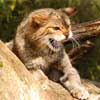
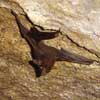
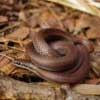
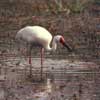
What do you know about these species?
Click on the images to learn more about each individual species.
*** Calculate your carbon footprint
*** Donate to support Whale of a Time projects
*** Live in harmony with the environment Click on the carbon calculator image below
*** Join the Whale of a Time Community
*** Make a model of your favourite species in clay Click on the workshop image below
*** Become a Whale of a Time Artist
*** Help raise awareness of our environment
*** Express your vision through a creative message
Click on the image below to see who is a Whale of a Time Artist